
Small and medium-sized enterprises (SMEs) are the backbone of Southeast Asia’s economy. In countries like Malaysia, Vietnam, Thailand, and Indonesia, SMEs represent over 95–99% of businesses and contribute significantly to employment and GDP.
Yet many SMEs still rely on fragmented systems to manage operations including spreadsheets for finance, standalone POS systems, manual inventory tracking or disconnected eCommerce platforms, etc.
As businesses grow, these disconnected tools create operational challenges as below:
- Inaccurate inventory
- Delayed reporting
- Poor customer visibility
- Inefficient processes
This is why ERP systems are becoming one of the most important digital investments for SMEs in 2026.
In this guide, we will explore:
- Why ERP Adoption Is Growing Rapidly Among SMEs in 2026
- Key features to look for in an ERP system
- The top 6 ERP solutions for SMEs
- Special considerations for Malaysian SMEs
- How to choose the right ERP implementation partner
Why ERP Adoption Is Growing Rapidly Among SMEs
Over the past decade, ERP adoption among SMEs has accelerated dramatically. What was once considered enterprise-level technology is now becoming a core operational system for small and mid-sized businesses seeking efficiency, scalability, and data-driven decision-making.
According to International Data Corporation (IDC), global spending on digital transformation is expected to exceed $3.9 trillion by 2027, with SMEs accounting for a rapidly growing share of enterprise software investments.
Below are the key drivers behind the rapid adoption of ERP for SMEs.
1. SMEs Are Under Pressure to Digitize Operations
Digital transformation is reshaping how businesses operate across industries such as retail, manufacturing, logistics, and professional services. However, many SMEs still rely on disconnected systems such as spreadsheets, standalone accounting software, and manual inventory tracking.
A Deloitte study found that businesses using integrated enterprise systems achieve up to 20–30% improvements in operational efficiency through streamlined workflows and improved data visibility.
ERP systems address these challenges by integrating core business functions into one centralized system such as:
- Finance and accounting
- Sales and customer relationship management
- Procurement and supply chain
- Inventory and warehouse management
- Human resources
For SMEs aiming to scale, this unified operational model significantly improves productivity and internal coordination.
2. Rapid Growth of E-Commerce and Omnichannel Retail
The explosive growth of eCommerce across Southeast Asia is another major driver of ERP adoption.
According to Google, Temasek Holdings, and Bain & Company in the e‑Conomy SEA Report, the region’s digital economy is projected to reach $330–360 billion in gross merchandise value by 2025.
This growth is fueled largely by SMEs selling through multiple channels such as physical retail stores, eCommerce websites, marketplaces (Shopee, Lazada, Tokopedia) and social commerce platforms.
Managing these channels manually often results in inventory inconsistencies, delayed order processing, data synchronization issues
ERP systems solve these challenges by synchronizing sales, inventory, and financial data across channels in real time. For example, ERP platforms can automatically:
- Update inventory levels when products sell online
- Generate invoices for orders
- Synchronize customer data
- Track delivery and logistics
3. Cloud ERP Has Reduced Implementation Costs
Historically, ERP systems required large upfront investments in IT infrastructure and licensing fees. This made ERP solutions inaccessible to most small businesses. However, the rise of cloud ERP solutions has dramatically reduced implementation costs.
Cloud ERP offers several advantages:
- Lower upfront investment
- Subscription-based pricing models
- Faster implementation timelines
- Reduced IT maintenance costs
- Remote access from anywhere
Additionally, cloud ERP reduces hardware requirements and enables SMEs to scale their systems as they grow. This affordability has made ERP software for SMEs more accessible than ever before.
4. SMEs Need Better Data for Strategic Decision-Making
Data-driven decision-making is becoming increasingly important for business leaders. Yet many SMEs lack access to real-time operational insights.
According to Forrester Research, companies that adopt data-driven decision processes are 58% more likely to achieve revenue growth compared to businesses that rely on intuition or fragmented data sources.
ERP systems provide centralized dashboards and analytics that allow SMEs to track sales performance, profit margins, inventory turnover, cash flow, even customer purchasing behavior, and more.
With access to accurate real-time data, business owners can make faster and more informed strategic decisions.
5. Increasing Complexity of Global Supply Chains
Even small businesses are now part of increasingly complex global supply chains. Many SMEs source materials internationally, manage multiple suppliers, and distribute products across different markets.
Without centralized supply chain management tools, businesses often face challenges such as stock shortages, excess inventory, delayed deliveries, inaccurate demand forecasting, etc.
ERP systems provide end-to-end supply chain visibility, helping businesses track procurement, inventory, logistics, and production in one platform.
6. Government Digitalization Programs Supporting SMEs
Governments across Southeast Asia are actively encouraging SMEs to adopt digital technologies. To accelerate digital adoption, the Malaysian government introduced initiatives such as the SME Digitalisation Grant, which subsidizes the adoption of business software including ERP systems.
These programs have significantly lowered the barrier to ERP adoption.
7. Modern ERP Systems Are Easier to Use
While older ERP systems were often complex and difficult to operate, requiring extensive IT expertise, ERP adoption is accelerating due to the improved usability of modern ERP platforms, which have adopted AI-powered integration.
These improvements allow SME teams to learn and adopt ERP systems more quickly, reducing training costs and implementation barriers.
Key Features SMEs Should Look for in ERP
Before selecting an ERP solution, SMEs should evaluate several important factors.
Scalability
The system must grow with your business as operations expand.
Modular Architecture
SMEs should be able to start with essential modules and expand later.
Localization
The ERP should support local tax systems, currencies, and regulations in Southeast Asia.
Integration Capabilities
ERP must integrate with:
- eCommerce platforms
- Payment gateways
- CRM tools
- Logistics systems
User-Friendly Interface
SME teams need intuitive systems that require minimal training.
Top 6 ERP for SMEs to Pick in 2026
Choosing the right ERP for SMEs depends on factors such as company size, industry, budget, and digital maturity. While many ERP platforms exist, a few solutions consistently stand out for small and medium-sized enterprises due to their scalability, flexibility, and strong ecosystem support.
Below are 6 of the most widely adopted ERP systems for SMEs in 2026, along with their key modules, strengths, limitations, and ideal use cases.
1. Odoo ERP
Overview
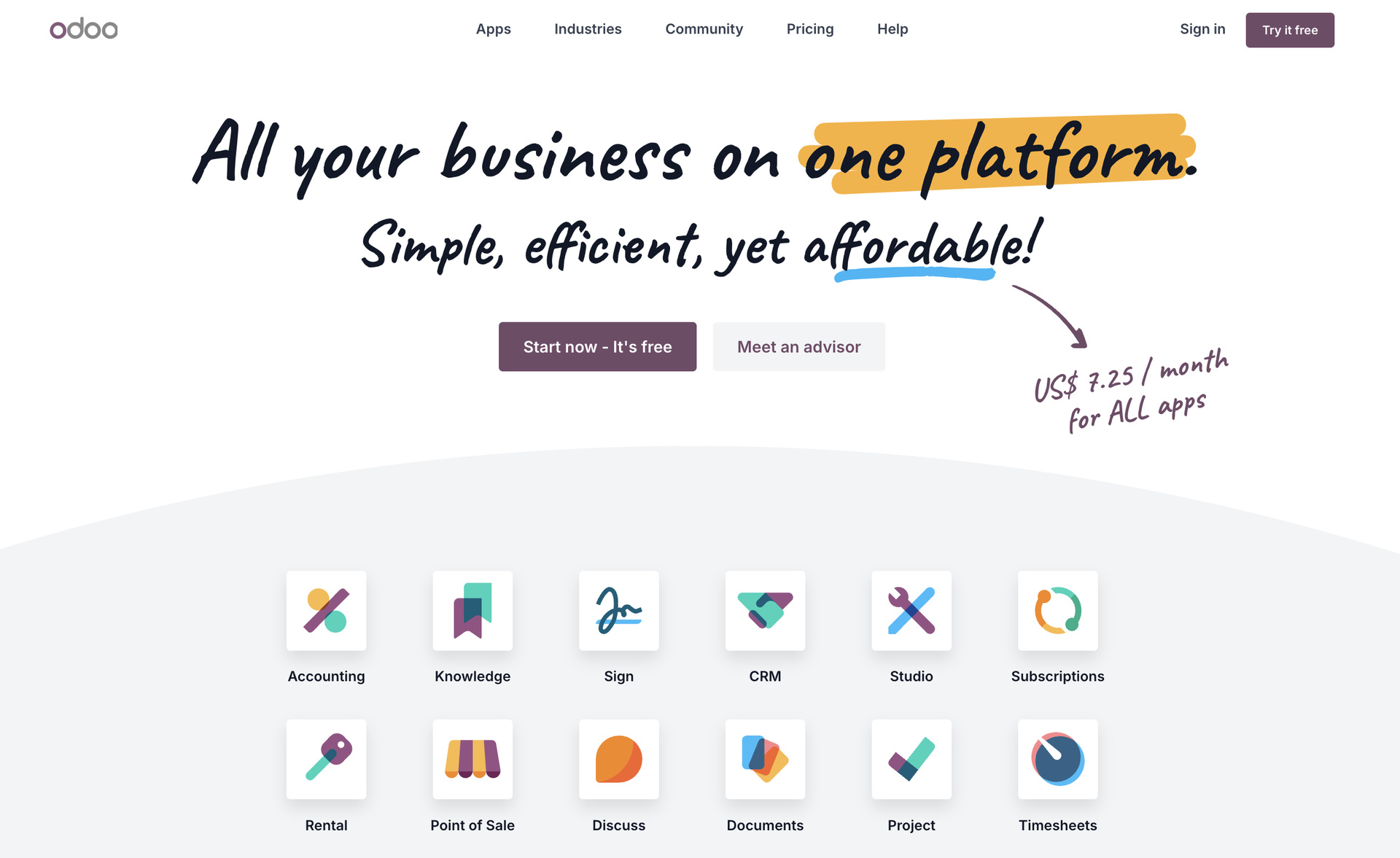
Odoo is one of the fastest-growing ERP platforms for SMEs worldwide. Its modular architecture allows companies to implement only the modules they need and expand as their business grows. The platform supports thousands of applications covering nearly every business function.
Best suited for:
- SMEs with 20–500 employees
- Fast-growing startups
- Companies needing customizable ERP solutions
Core Modules / Functions
Odoo offers more than 40 integrated business applications, including:
Finance & Accounting
- Accounting
- Invoicing
- Expense management
- Financial reporting
Sales & Customer Management
- CRM
- Sales pipeline
- Marketing automation
- Customer support
Inventory & Supply Chain
- Warehouse management
- Purchasing
- Inventory tracking
- Barcode scanning
Manufacturing & Operations
- Manufacturing planning
- Bill of materials (BOM)
- Quality management
- Maintenance
Retail & eCommerce
- POS
- eCommerce website builder
- Marketplace integration
Human Resources
- Payroll
- Recruitment
- Employee management
Advantages | Weaknesses |
✔ Highly customizable due to open-source architecture ✔ Large ecosystem of modules and integrations ✔ Affordable compared to enterprise ERP systems ✔ Suitable for many industries (retail, manufacturing, services) ✔ Modular implementation allows gradual adoption | ❌ Implementation may require technical expertise ❌ Heavy customization can increase project complexity ❌ Community edition has fewer enterprise features |
Many SMEs prefer Odoo because it offers deep customization and automation with lower total cost of ownership compared to legacy ERP systems.
2. Oracle NetSuite
Overview
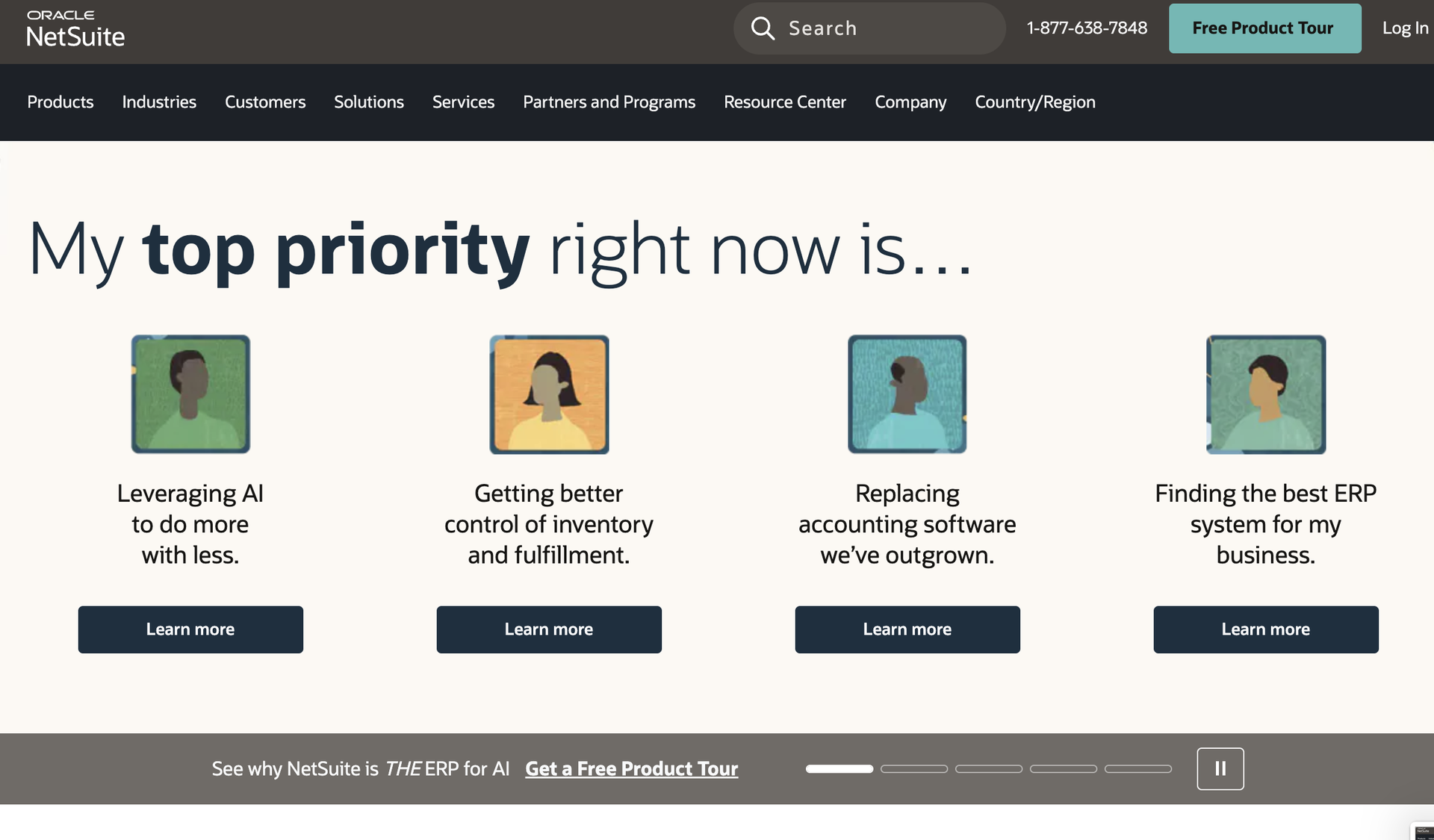
NetSuite is one of the most established cloud ERP platforms, widely used by mid-sized companies and fast-growing businesses expanding internationally. The platform provides a unified suite for finance, operations, and eCommerce management.
Best suited for:
- Fast-scaling SMEs
- International companies
- Companies planning IPO or acquisitions
Core Modules / Functions
Financial Management
- General ledger
- Revenue recognition
- Financial consolidation
- Tax management
CRM & Sales
- Sales forecasting
- Opportunity management
- Marketing automation
Inventory & Supply Chain
- Demand planning
- Procurement
- Order management
- Warehouse management
eCommerce
- SuiteCommerce platform
- Omnichannel retail management
Analytics
- Real-time dashboards
- Financial reporting
- Business intelligence
Advantages | Weaknesses |
✔ Strong financial management capabilities ✔ Built-in multi-currency and multi-country support ✔ Scalable for international expansion ✔ Real-time dashboards and analytics | ❌ Higher licensing costs than many SME ERP systems ❌ Customization may require experienced consultants ❌ Implementation timelines can be long |
3. SAP Business One
Overview
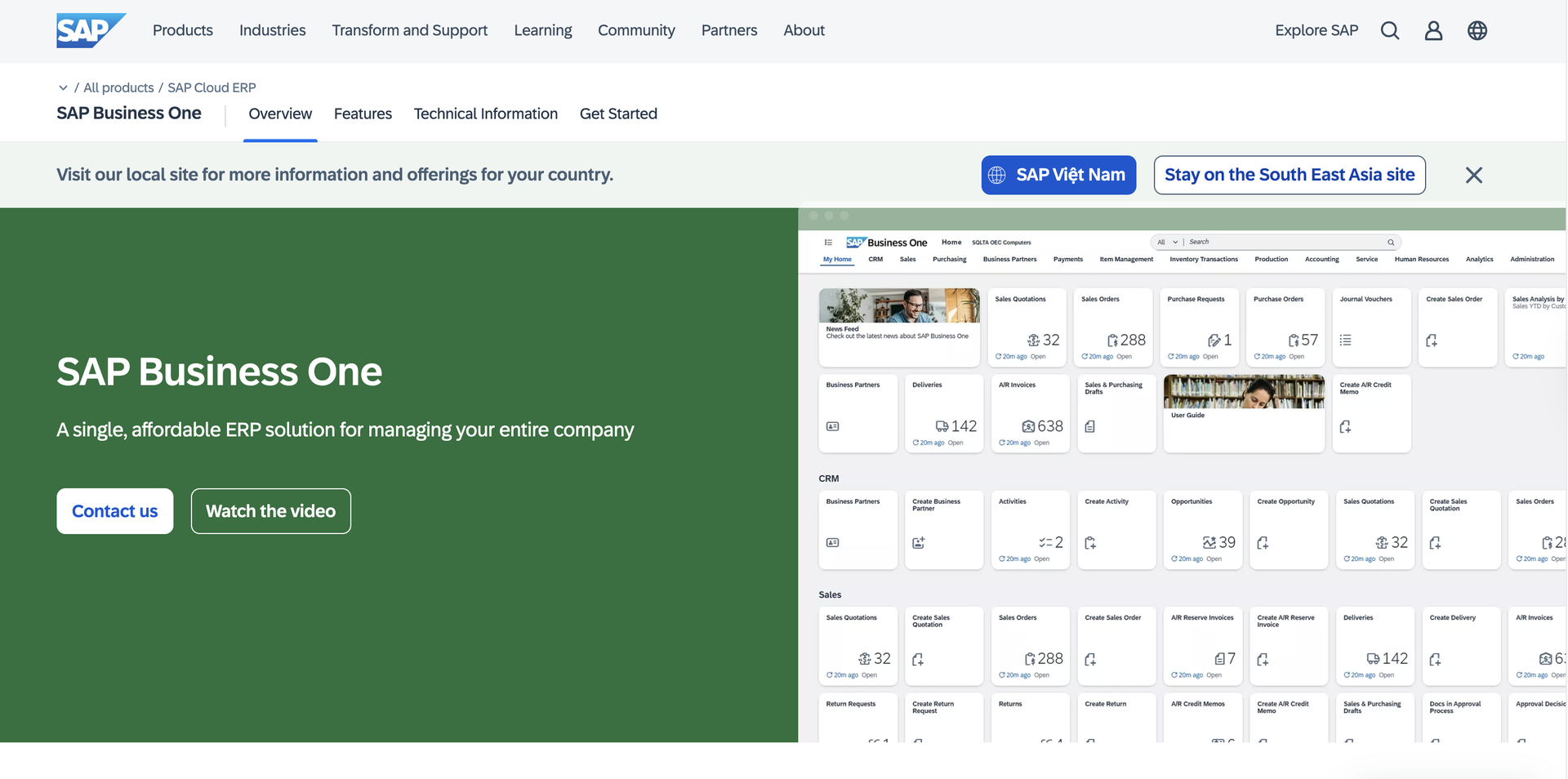
SAP Business One is a well-known ERP solution designed specifically for small and medium-sized businesses that require enterprise-grade financial control and operational visibility.
It is especially popular in manufacturing and distribution industries.
Best suited for:
- Wholesale and distribution companies
- Companies requiring strict financial governance
Core Modules / Functions
Finance
- Accounting
- Financial reporting
- Asset management
- Tax compliance
Supply Chain Management
- Procurement
- Warehouse management
- Inventory control
- Supplier management
Production
- Manufacturing planning
- Bill of materials
- Production scheduling
Sales & CRM
- Customer management
- Sales tracking
- Service management
Advantages | Weaknesses |
✔ Reliable and proven ERP platform ✔ Strong financial and operational reporting ✔ Excellent for manufacturing and supply chains ✔ Backed by SAP’s global ecosystem | ❌ Higher implementation cost ❌ Customization can be complex ❌ Requires experienced consultants |
4. Microsoft Dynamics 365 Business Central
Overview
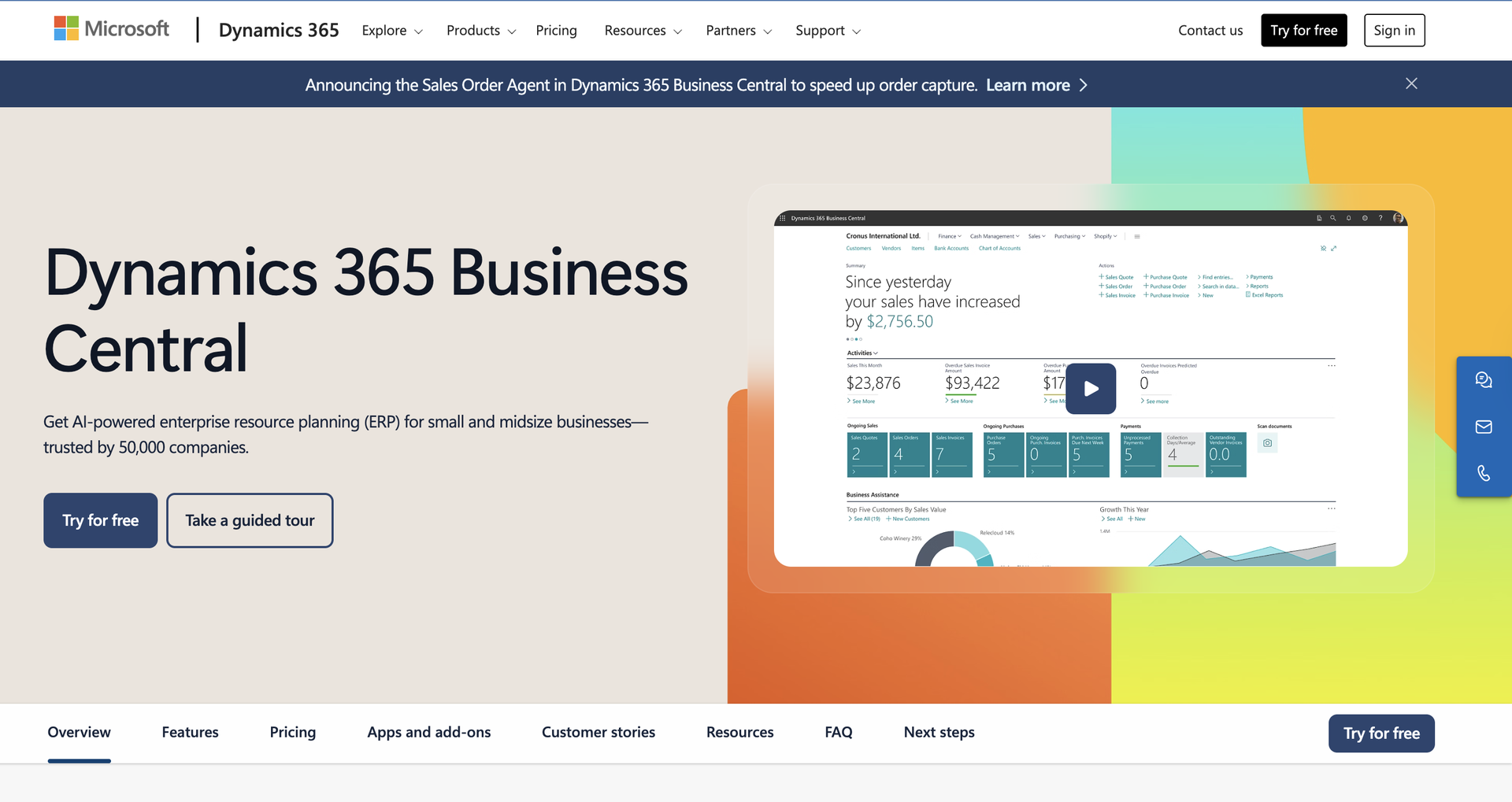
Microsoft Dynamics 365 Business Central is a cloud-based ERP system designed for small and mid-sized companies, particularly those already using the Microsoft ecosystem.
The system integrates seamlessly with Microsoft 365, Teams, Outlook, and Power BI.
Best suited for:
- Companies already using Microsoft 365
- Service-based SMEs
- Consulting firms
- Growing international companies
Core Modules / Functions
Financial Management
- Accounting
- Budgeting
- Financial forecasting
Supply Chain
- Purchasing
- Inventory management
- Order processing
Project Management
- Project costing
- Time tracking
- Resource planning
CRM & Sales
- Customer management
- Sales forecasting
Analytics
- Integration with Power BI dashboards
Advantages | Weaknesses |
✔ Seamless integration with Microsoft tools ✔ Strong cloud infrastructure ✔ Familiar interface for Microsoft users ✔ Powerful analytics with Power BI | ❌ Licensing costs can increase with add-ons ❌ Implementation requires skilled consultants ❌ Customization may require development expertise |
5. Acumatica
Overview
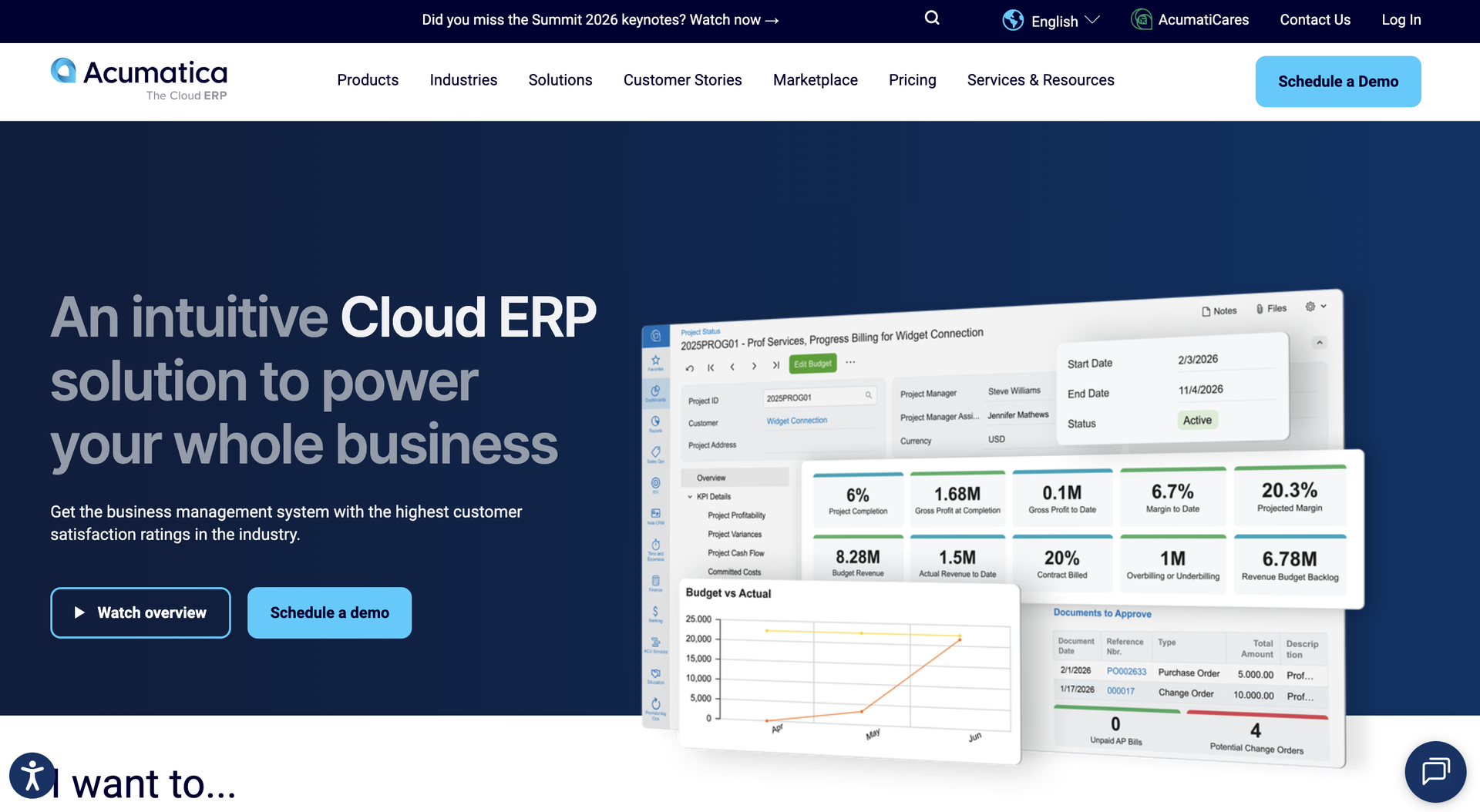
Acumatica is a cloud-native ERP platform known for its flexible pricing model and strong support for distribution and service-based industries.
Unlike many ERP systems that charge per user, Acumatica uses resource-based pricing, making it attractive for companies with large teams.
Best suited for:
- Construction firms
- Service-based smes
- Mid-sized companies scaling operations
Core Modules / Functions
Financial Management
- Accounting
- Cash management
- Tax management
Distribution Management
- Order management
- Inventory tracking
- Warehouse management
Manufacturing
- Production management
- Material requirements planning
Project Accounting
- Project budgeting
- Billing
- Time tracking
Advantages | Weaknesses |
✔ Flexible pricing model ✔ Strong cloud architecture ✔ Scalable for growing companies ✔ Customizable platform | ❌ Smaller ecosystem compared to SAP or Microsoft ❌ Customization costs may increase over time ❌ Fewer integrations compared to larger ERP vendors |
6. ERPNext
Overview
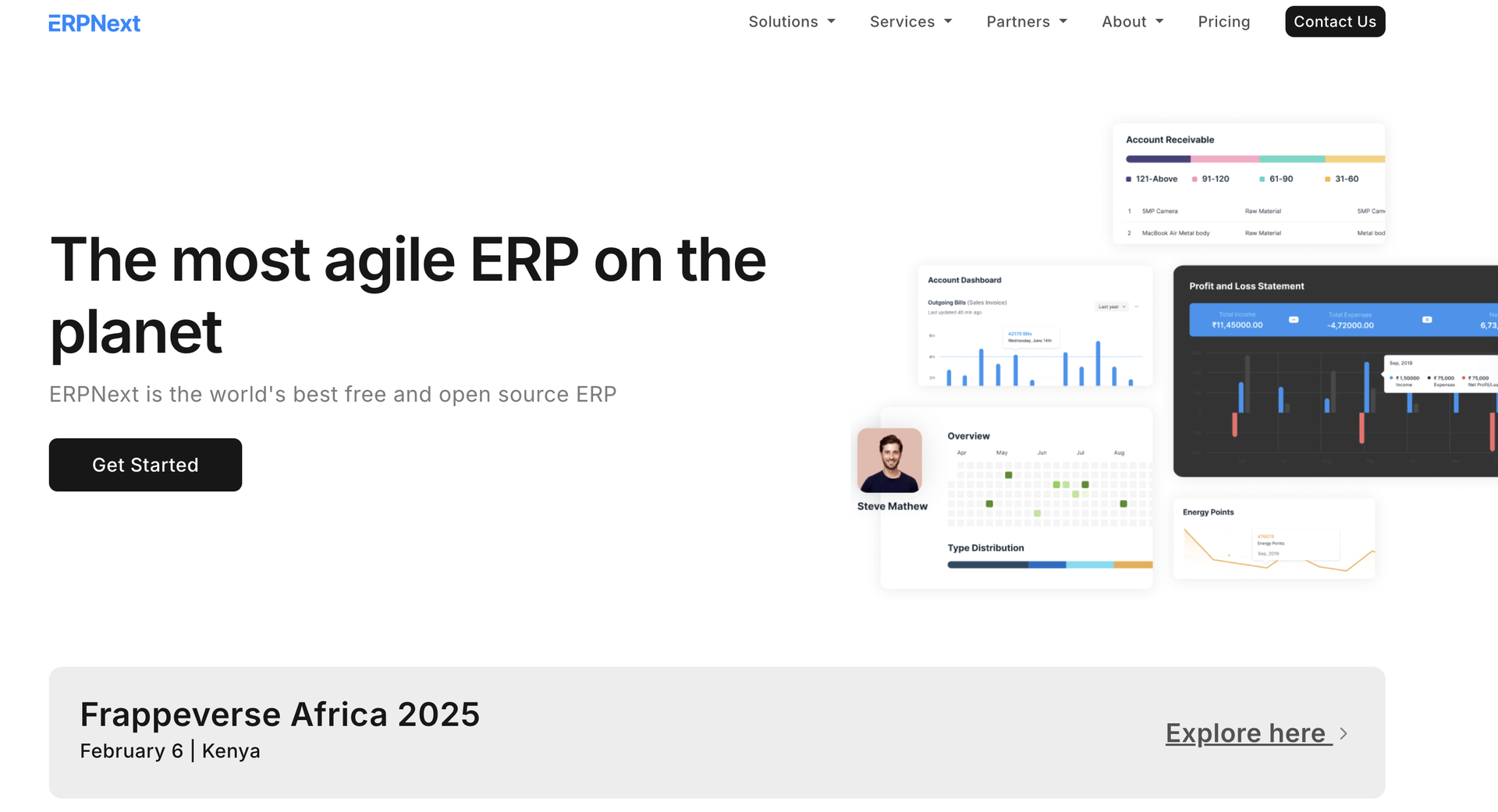
ERPNext is an open-source ERP system designed for SMEs seeking a flexible and affordable alternative to proprietary ERP platforms.
The system provides integrated modules covering multiple business functions within a single platform.
Best suited for:
- Startups and small smes
- Tech-savvy companies
- Businesses with internal it teams
Core Modules / Functions
Accounting
- General ledger
- Invoicing
- Financial reporting
Sales & CRM
- Customer management
- Quotation management
- Sales orders
Inventory
- Warehouse management
- Stock tracking
- Procurement
Manufacturing
- Production planning
- Bom management
Human Resources
- Payroll
- Attendance management
- Employee records
Advantages | Weaknesses |
✔ Open-source and highly customizable ✔ Lower cost compared to commercial ERP ✔ Active developer community ✔ Suitable for startups and small businesses | ❌ Smaller ecosystem than commercial ERP platforms ❌ Fewer enterprise-level features ❌ Requires technical expertise for implementation |
Quick Comparison of ERP Systems for SMEs
| ERP System | Best For | Advantage | Weakness |
| Odoo | Flexible SMEs | Modular & customizable | Needs implementation partner |
| NetSuite | Global scaling companies | Strong financial management | Expensive |
| SAP Business One | Manufacturing SMEs | Enterprise-grade control | Complex implementation |
| Dynamics 365 | Microsoft ecosystem users | Integration with Microsoft tools | Licensing costs |
| Acumatica | Distribution & services | Flexible pricing | Smaller ecosystem |
| ERPNext | Budget-conscious SMEs | Open-source | Limited enterprise features |
ERP for Malaysian SMEs: Why Adoption Is Accelerating
Malaysia has one of the most digitally advanced SME ecosystems in Southeast Asia. Malaysian SMEs face several operational challenges:
- SST tax compliance
- Managing multi-channel retail
- Cross-border trade
- Complex supply chains
ERP systems help address these challenges by providing:
Automated Tax Reporting
ERP systems simplify SST reporting and financial compliance.
Omnichannel Retail Management
Retailers can manage:
- POS
- eCommerce
- Marketplaces
from one platform.
Multi-currency Operations
This is critical for companies exporting across ASEAN markets.
Supply Chain Visibility
Real-time inventory tracking improves purchasing and logistics management.
For Malaysian SMEs planning to expand regionally, ERP is quickly becoming a strategic necessity.
Why ERP Implementation Often Fails Without the Right Partner
Many ERP projects fail not because of the software, but because of poor implementation planning. Common challenges include:
- Incorrect system configuration
- Lack of business process alignment
- Insufficient user training
- Poor data migration
This is why choosing an experienced ERP implementation partner is critical.
A1 Consulting is a trusted Odoo ERP consulting & implementation partner helping businesses across Southeast Asia successfully adopt modern ERP systems.
With deep expertise in Odoo ERP solutions and being Gold Odoo Partner Malaysia, A1 Consulting supports companies through the entire ERP journey.
ERP Services Offered
- ERP consulting and system design
- Odoo ERP implementation
- ERP customization and development
- System integration
- Training and user onboarding
- Post-implementation support
Industry Expertise
A1 Consulting works with companies in industries such as:
- Retail and ecommerce
- Manufacturing
- Distribution
- Professional services
- And many more
This industry experience ensures ERP systems are configured to match real operational needs. Explore more case studies from A1 Consulting's customers that have successfully deployed ERP system.
Start your ERP Journey Today!
Whether you're a retail business, manufacturer, or distributor, ERP can transform how your company operates.
Sally N.
BDM - Partner and Alliance
With over 7 years of experience in ERP advisory, Sally has worked closely with SMEs across Malaysia to streamline operations and drive digital transformation. Her deep understanding of business processes and hands-on approach have made her a trusted advisor to many growing companies. Through this blog post, Sally aims to share practical insights and real-world lessons drawn from her implementation experience, offering guidance to businesses navigating their own ERP journey.