
Malaysia’s higher education sector is undergoing a significant transformation. Universities today face growing pressure to deliver better student experiences, ensure strong governance and compliance, and operate with greater financial efficiency, all while managing limited resources and rising operational complexity.
Public universities must meet strict reporting requirements from the Ministry of Higher Education (MOHE) and the Malaysian Qualifications Agency (MQA), while private universities compete aggressively on service quality, digital capabilities, and international reputation. At the same time, students and parents increasingly expect fast, digital, self-service experiences during the operational process.
According to the MOHE annual report, a significant proportion of Malaysian universities still rely on fragmented or semi-manual administrative systems. In this environment, ERP implementation for education sector is becoming the digital backbone of modern universities.
In this article, we will walk through the current Malaysian higher education system situation and why they need ERP, especially Odoo ERP for effective digital campus operations.
Current Malaysia Higher-education Landscape
Malaysia boasts a diverse range of universities, each with its own set of academic programs, administrative structures, and student populations. The rapid growth and globalization of higher education in the country have led to increased complexities in managing these institutions efficiently. It includes:
- Public universities with large student populations and strict governance requirements
- Private universities and colleges focused on operational efficiency and student/ parent satisfaction
- International branch campuses operating under global standards
- Technical and Vocational education and training (TVET) and specialised institutions with unique academic and administrative needs
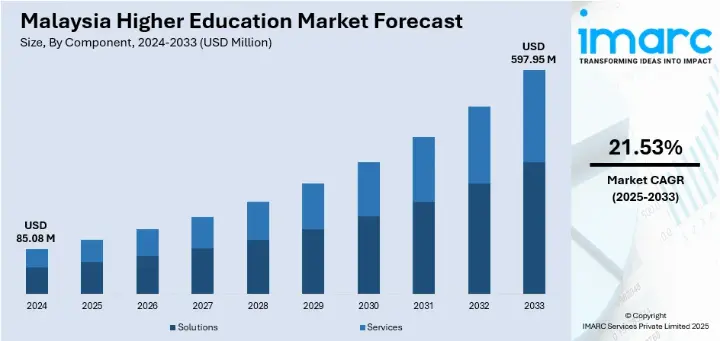
(Source: IMARC Group)
Many universities operate across multiple campuses, manage local and international students, and coordinate academic, administrative, and financial processes that span faculties, departments, and external stakeholders. Despite this complexity, many institutions still operate with many separate systems and applications for each operational entity including student records, programmes and courses, finance, HR and procurement; manual workflows and spreadsheet-based reporting; and limited realtime visibility for leadership.
Key Pain Points Faced by Malaysian Universities
Fragmented systems across departments
One of the most persistent challenges is the lack of integration between systems. Student administration, finance, HR, and procurement often run on separate platforms - or are managed manually on Excel - leading to duplicated data, inconsistencies, and reporting delays.
APQC Higher Education studies show that institutions without integrated ERP systems spend up to 40–50% more administrative time on manual reconciliation and reporting. This fragmentation slows decision-making and increases operational risk, especially during audits or accreditation reviews.
Administrative inefficiency & staff high workload
University administrative teams face growing workloads as student numbers increase and compliance requirements become more complex. Manual processes such as paper forms, email approvals, and spreadsheet tracking consume time that could be better spent on strategic initiatives.
Slow and complex procurement approval processes
Procurement is a particularly critical pain point for universities. Purchasing teaching materials, lab equipment, IT assets, or campus services often requires multiple approval layers involving departments, faculty heads, finance teams, and procurement units.
In many Malaysian universities, these approvals are still handled via email chains or paper-based forms or manual budget checks.
This basically results in:
- Long procurement cycle times
- Poor visibility into approval status
- Inconsistent enforcement of procurement policies
- Audit and compliance challenges
In fact, APQC benchmarking data shows that organisations with automated procurement workflows can reduce approval cycle times by 30–60%.
Student experience challenges
Today’s students expect digital-first services - online registration, real-time academic records, transparent billing, and fast approvals. However, many universities struggle to meet these expectations due to disconnected systems.
Delays in transcript issuance, billing clarification, or administrative approvals negatively affect student satisfaction and institutional reputation.
Financial & budgetary pressures
Universities in Malaysia face increasing pressure to do more with less. Whether managing public funding constraints or private tuition-based revenue, leadership teams need real-time financial visibility to control costs and allocate budgets effectively. Without integrated financial systems, tracking expenditure by faculty, programme, or project becomes slow and error-prone.
What Exactly is ERP for Educational Institutions?
ERP for education refers to an integrated enterprise system that connects academic, administrative, and financial operations across a university or campus into a single digital platform. In the Malaysian higher-education context, ERP plays a critical role in supporting the enterprise-level operations of a university in managing the full student lifecycle, supporting regulatory compliance, improving financial governance, and streamlining daily operations across faculties and departments.
Core Odoo ERP Modules for Universities and Campuses in Malaysia
Odoo ERP offers a modular architecture that allows Malaysian universities and campuses to adopt digital transformation at a sustainable pace. Instead of implementing a large, rigid system upfront, institutions can deploy only the modules they need, then scale as operational complexity grows. This approach is particularly well-suited to public and private universities in Malaysia, where budgets, governance requirements, and digital maturity levels vary widely.
Below are the core Odoo ERP modules most relevant to higher-education institutions:
Student administration and academic operations
Odoo ERP plays a crucial role in supporting academic administration and managing the student lifecycle. Universities can utilize Odoo to manage student enrollment workflows, intake coordination, program administration, academic progression, and graduation processes.
Centralised student records reduce data duplication and enable administrative teams to access accurate information across faculties and campuses. When integrated with existing LMS or Student Information Systems (SIS), Odoo ERP becomes the operational backbone that ensures consistency between academic activities and institutional administration.
Finance and budget management
Finance is often the first module Malaysian universities implement when adopting ERP. Odoo’s finance and accounting modules support tuition billing, accounts receivable, accounts payable, budgeting, and financial reporting within a single system. Universities gain real-time visibility into financial performance across faculties, departments, and programmes, enabling better cost control and budget planning.
For leadership teams, this transparency supports faster decision-making and ensures alignment with funding requirements, internal governance policies, and external audit expectations.
HR and payroll management
Odoo’s HR and payroll modules allow universities to manage staff records, contracts, attendance, leave, performance evaluations, and payroll in a unified platform. Automation reduces manual processing, improves data accuracy, and ensures compliance with labour regulations. For universities in Malaysia, this also supports workforce planning and talent management in an increasingly competitive education sector.
Procurement and purchasing management
Procurement is a critical operational area where many universities face delays and inefficiencies. Odoo ERP enables institutions to digitise and standardise procurement workflows, from purchase requests to approvals and vendor management. Multi-level approval rules can be configured based on department, budget thresholds, or item categories, ensuring governance while improving speed and transparency. Real-time budget checks prevent overspending, while automated audit trails support internal controls and regulatory compliance.
For campuses managing laboratories, IT equipment, facilities, and academic resources, Odoo’s procurement module significantly reduces administrative bottlenecks.
Asset and facilities management
Universities manage a wide range of physical assets, including laboratories, classrooms, IT equipment, vehicles, and campus facilities. Odoo’s asset management module allows institutions to track asset lifecycle, depreciation, maintenance schedules, and utilisation. Centralised asset records help universities optimise resource usage, reduce losses, and support financial reporting requirements. For multi-campus institutions in Malaysia, this module provides visibility across locations and improves long-term infrastructure planning.
Reporting, analytics, and compliance
Higher-education institutions operate under strict reporting and governance requirements. Odoo ERP for education provides built-in reporting and analytics tools that consolidate data across finance, HR, procurement, and academic administration. Universities can generate audit-ready reports, monitor key performance indicators, and respond more efficiently to regulatory and accreditation requests from bodies such as the MOHE and MQA.
Integration and scalability for digital campuses
One of Odoo ERP’s key strengths is its ability to integrate with existing campus systems, including LMS platforms, student portals, payment gateways, and third-party reporting tools. This flexibility allows Malaysian universities to modernise their operations without disrupting academic delivery. As institutions grow or introduce new programmes and campuses, Odoo’s modular design ensures the ERP system can scale alongside institutional needs.
How ERP Helps Malaysian Universities Modernize The Operation System
By implementing Odoo ERP modules progressively, universities can:
- Replace fragmented systems with a single source of truth
- Reduce manual work through automated approvals
- Improve student experience with faster services
- Gain real-time financial and operational visibility
- Strengthen governance and compliance readiness
- Prioritise high-impact areas such as finance and procurement
- Reduce upfront implementation risk and cost
- Build a long-term digital foundation for smart campus initiatives
This makes Odoo ERP a practical and future-ready solution for Malaysian universities seeking to balance operational efficiency, governance, and student-centric service delivery.
Practical Odoo ERP Implementation Roadmap for Malaysian Universities
Malaysian universities operate within complex academic structures, regulatory frameworks, and budget constraints, which means ERP implementation must be phased, well-governed, and aligned with institutional priorities. Odoo ERP’s modular architecture makes it particularly suitable for this context, enabling universities to modernise operations progressively without disrupting academic delivery.
Below is a practical, step-by-step roadmap tailored specifically for Malaysian higher-education institutions.
Phase 1: Institutional readiness
The foundation of a successful Odoo ERP implementation lies in institutional readiness. Universities should begin by clearly defining why ERP is being implemented and what outcomes are expected. This involves aligning leadership, administrative teams, and IT departments around a shared vision.
Universities should also evaluate regulatory and governance requirements, including MOHE and MQA reporting obligations, to ensure ERP configuration supports compliance from the outset.
Phase 2: Solution design and module prioritisation
In this phase, universities should design an Odoo ERP solution that aligns with their operational priorities and budget realities. Rather than implementing all modules at once, institutions should prioritise high-impact areas.
Phase 3: Data preparation and migration
Data quality is one of the most underestimated risks in ERP implementation. Malaysian universities often hold data across spreadsheets, legacy systems, and manual records, making preparation critical. This phase ensures Odoo ERP becomes a single source of truth, reducing future reconciliation issues and audit risks.
Phase 4: Config, customization and local compliance
Odoo ERP’s flexibility allows universities to configure workflows without excessive custom development.
Phase 5: User training
ERP success depends heavily on user adoption. Universities should invest in structured training and change management programmes that recognise the cultural realities of academic institutions.
Phase 6: Pilot go-live and stabilisation
Phase 7: Full rollout and continuous improvement
After a successful pilot, Odoo ERP can be rolled out across additional faculties, campuses, or modules. Because Odoo ERP is modular, universities can continuously enhance the system by adding new capabilities without major disruption.
Phase 8: Long-term optimisation and digital campus enablement
ERP implementation does not end at go-live. Over time, Odoo ERP becomes the foundation for broader digital campus initiatives. With the right implementation partner, Malaysian universities can evolve their ERP system in line with institutional growth and national digital education strategies.
Conclusion
As Malaysian universities face increasing operational complexity, tighter budgets, and rising expectations from students and regulators, the need for an integrated and future-ready ERP platform has never been more critical. Odoo ERP for education offers a practical and scalable solution that enables universities to improve efficiency, transparency, and governance across campus operations.
Moreover, the success of ERP implementation depends not only on technology, but also on experience, local understanding, and execution capability. A1 Consulting is the leading ERP consulting & implementing company in Malaysia with 17+ years of experience, bringing deep expertise in Odoo ERP implementation, combined with a strong understanding of Malaysian regulatory requirements and higher-education operations.
If you are considering to adopt ERP system for education sector in Malaysia, contact A1 Consulting for further discussion or explore all ERP documents in our digital blog hub.

Sally N.
BDM - Partner and Alliance
With over 7 years of experience in ERP advisory, Sally has worked closely with SMEs across Malaysia to streamline operations and drive digital transformation. Her deep understanding of business processes and hands-on approach have made her a trusted advisor to many growing companies. Through this blog post, Sally aims to share practical insights and real-world lessons drawn from her implementation experience, offering guidance to businesses navigating their own ERP journey.