
Enterprise Resource Planning (ERP) is always considered as the backbone of business operations in the digital transformation era, integrating finance, supply chain, sales, HR, etc in a single platform. AI-driven ERP is currently elevating this role. By incorporating artificial intelligence (AI) into ERP, businesses switch from traditional process management into intelligent operations: the ERP handles core transactional workflows, while AI layers on smarter automation, deeper analytics, and faster data‑driven decision support.
IDC predicts that by 2026, 60% of Asia–Pacific organisations will build digital‑first platforms that use AI, data, and cloud as core technologies for new services and operating models.
This article will provide you an ultimate guide to AI in ERP solutions, along with the most critical ERP trends in 2026 - key factors that might reshape your business to increase competitiveness in the digital transformation journey.
What is AI in ERP?
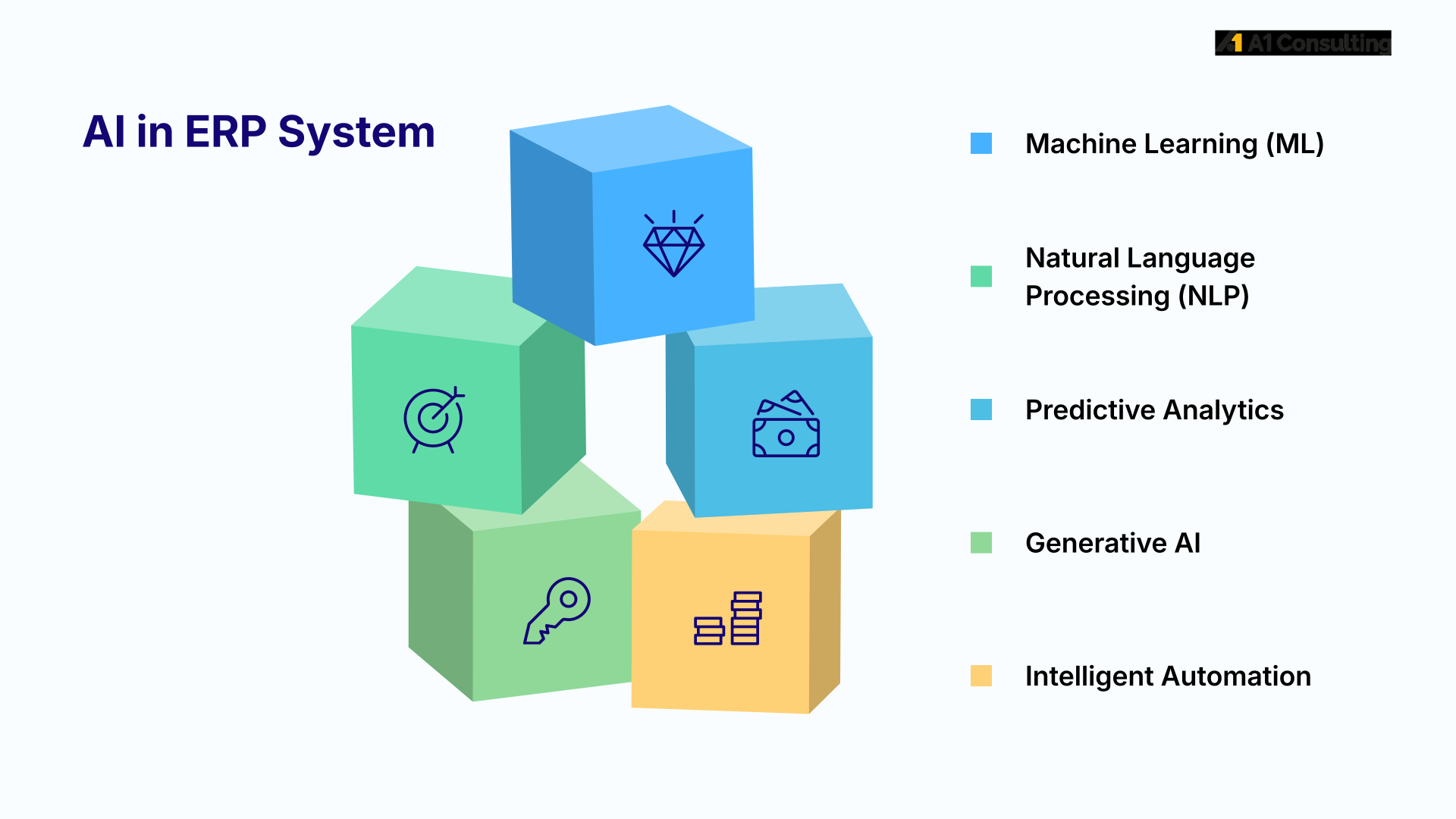
Classic ERP systems excel at storing transactions, enforcing workflows, and generating reports, but they are largely reactive. When AI capabilities are embedded, ERP becomes proactive and assistive. In fact, Ai in ERP refers to the integration of AI technologies into ERP systems that:
- The system continuously learns from historical and real‑time data to predict demand, risks, and anomalies.
- Repetitive, rule‑based work is automated.
- Users receive recommendations, alerts, and forecast instead of relying only on static screens and manual reports.
Having the capability to run all those activities, AI in ERP systems typically includes:
- Machine learning (ML) to identify patterns and make predictions
- Natural language processing (NLP) to understand user queries and unstructured data
- Predictive analytics to forecast outcomes such as demand or cash flow
- Generative AI to create reports, summaries, and recommendations
- Intelligent automation to optimise workflows and approvals
The key difference is that AI-enabled ERP does not just answer “What happened?”—it also answers “What is likely to happen next?” and “What should we do about it?”
Practical Use Cases of an AI-powered ERP System in Business
Industry research shows that over 70% of ERP vendors have already embedded AI capabilities, and adoption among enterprises continues to accelerate as organisations seek faster insights and operational resilience (sources: Gartner)
Predictive Analytics and Forecasting
One of the most valuable applications of AI in ERP is predictive analytics. Traditional ERP systems rely on historical data and static rules, while AI-powered ERP uses ML models to detect patterns, seasonality, and anomalies across large datasets.
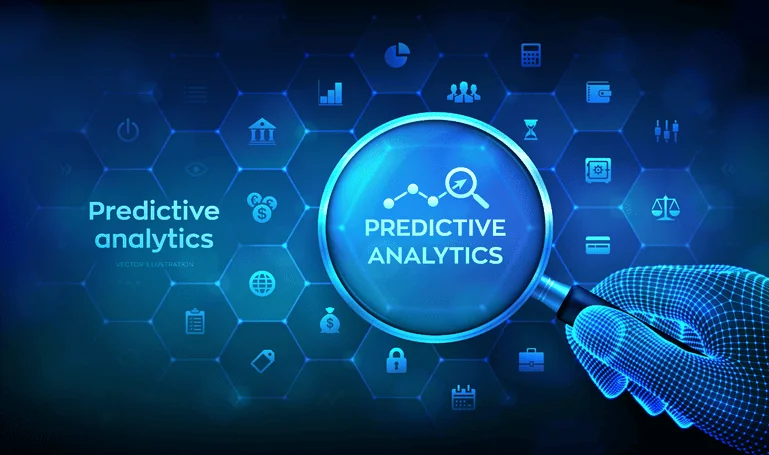
In practice, AI enables ERP systems to:
- Forecast sales demand with higher accuracy
- Predict cash flow and revenue fluctuations
- Anticipate inventory shortages or excess stock
- Model “what-if” business scenarios
According to industry reports of McKinsey, AI-driven forecasting can improve demand forecast accuracy by 15–30% compared to traditional methods.
This capability is especially impactful for manufacturing, retail, and distribution businesses, where forecasting errors directly affect margins and customer satisfaction.
Intelligent Process Automation Across ERP Workflows
AI significantly expands automation inside ERP systems beyond simple rule-based workflows. By combining ML with robotic process automation (RPA), ERP systems can now handle complex, judgment-based tasks.
Common examples include:
- Automated invoice recognition, validation, and posting
- Smart approval workflows that adapt based on risk and value
- Automated bank reconciliation and expense categorisation
- Exception handling without manual intervention
Studies estimate that up to 40% of routine ERP tasks can be automated using AI and intelligent automation technologies, according to UIPath report. This directly translates into lower operational costs and allows finance, HR, and operations teams to focus on strategic work rather than administrative tasks.
Advanced Data Analysis and Real-Time Business Insights
AI transforms ERP reporting from static dashboards into continuous insight engines. Instead of waiting for month-end reports, decision-makers receive real-time alerts, trend analysis, and performance insights.
AI-powered ERP systems can:
- Identify anomalies in financial transactions
- Highlight underperforming products or suppliers
- Detect early warning signs in operational KPIs
- Correlate data across departments automatically
Prescriptive Decision Support and AI Recommendations
While predictive analytics tells businesses what might happen, prescriptive AI in ERP goes one step further by recommending what actions to take. For leadership teams, ERP becomes a decision-support partner, not just an information system. For examples:
- Suggesting optimal procurement quantities and suppliers
- Recommending budget reallocations based on forecasted cash flow
- Proposing production schedule adjustments
- Identifying cost-saving opportunities automatically
Natural Language Processing (NLP) and Conversational ERP
AI also changes how users interact with ERP systems. With NLP and conversational AI, users can interact with ERP using everyday language rather than complex menus or reports. This makes ERP systems more accessible to non-technical users and increases overall system adoption.
AI-Driven Personalisation and User Experience
Modern ERP platforms use AI to personalise dashboards, alerts, and workflows based on user roles and behaviour. Instead of one-size-fits-all interfaces, ERP adapts dynamically. According to IDC and Gartner studies, 60% of ERP vendors are investing heavily in AI to enhance user experience and role-based insights.
AI in Procurement and Supply Chain Management
Supply chain and procurement are among the most AI-intensive ERP modules today. AI helps organisations manage volatility, supplier risk, and cost optimisation.
AI-powered ERP enables:
- Dynamic supplier evaluation and risk scoring
- Predictive lead time analysis
- Intelligent demand-supply matching
Predictive Maintenance and Asset Management
For asset-heavy industries, AI in ERP enables predictive maintenance by analysing sensor data, usage patterns, and historical failures.
Top ERP trends might reshape your business in 2026
Several ERP trends - driven by AI, cloud architecture, and real-time data - are fundamentally changing how organisations operate, make decisions, and scale. Businesses that adapt early will gain agility, efficiency, and resilience, while late adopters risk falling behind.
Below are the five most impactful ERP trends in 2026 and how they may reshape your business.
Hyper-automation and Intelligent workflows
Hyper-automation is moving ERP beyond simple task automation into end-to-end intelligent workflows that continuously learn and optimise themselves. Instead of automating isolated steps, modern ERP systems combine AI, ML, and RPA to orchestrate entire business processes.
In practice, this means:
- ERP systems automatically routing approvals based on risk, value, and urgency
- Finance workflows that self-reconcile transactions and flag anomalies
- Procurement processes that adapt approval paths dynamically based on supplier performance
- HR workflows that trigger onboarding, payroll, and compliance actions without manual coordination
According to industry studies, organisations that adopt hyper-automation report:
- 30–50% reduction in manual processing effort
- Faster cycle times across finance, procurement, and operations
- Improved compliance through automated audit trails
By 2026, hyper-automation will no longer be a competitive advantage - it will be a baseline expectation. ERP systems that fail to support intelligent workflows will struggle to keep pace with business speed.
Cloud-Native ERP and Composable Architecture
The shift from traditional monolithic ERP systems to cloud-native and composable ERP architectures is accelerating. Rather than deploying a single, rigid system, organisations are increasingly adopting ERP platforms built from modular components that can be added, replaced, or scaled independently.
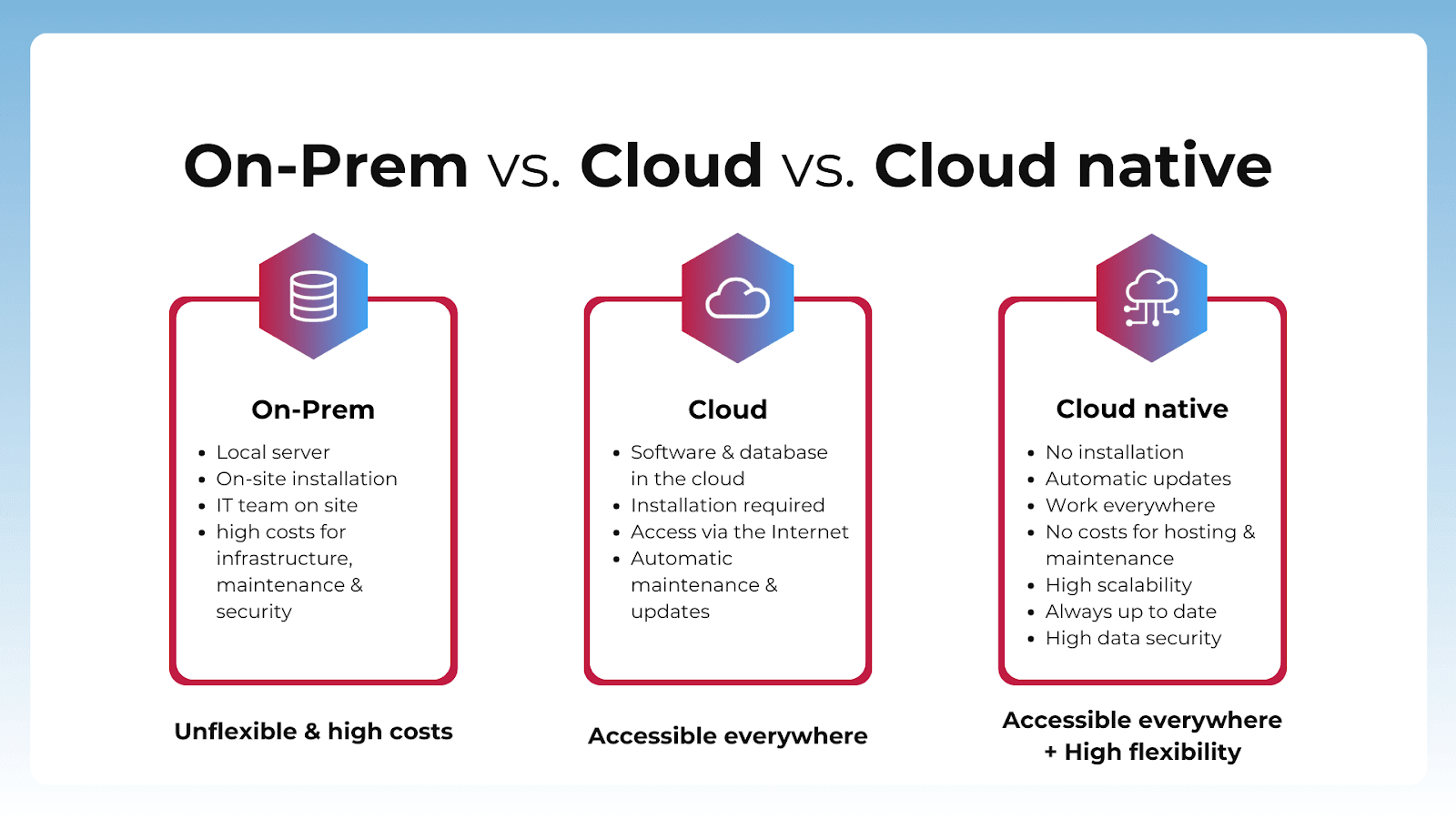
source: E-commerce Germany News
Cloud-native ERP enables:
- Faster deployment and upgrades
- Elastic scalability based on business demand
- Lower infrastructure and maintenance costs
- Seamless integration with AI, analytics, and third-party applications
Composable ERP architecture allows businesses to:
- Start small and expand functionality over time
- Tailor ERP capabilities to specific industry or operational needs
- Avoid vendor lock-in associated with highly customised legacy systems
ERP buyers will prioritise platforms that support API-first integration, modular design, and cloud flexibility, allowing ERP to evolve alongside business strategy rather than constrain it.
Integrated ESG and Sustainability Dashboards
Environmental, Social, and Governance (ESG) reporting is becoming a core business requirement, not just a compliance exercise. In 2026, ERP systems are increasingly expected to serve as the single source of truth for sustainability data.
Modern ERP platforms are embedding ESG capabilities directly into core modules:
- Tracking energy usage, emissions, and waste from operations
- Monitoring supplier sustainability and compliance
- Linking ESG metrics with financial performance
- Generating audit-ready sustainability reports
This integration allows organisations to:
- Align sustainability goals with operational and financial decisions
- Improve transparency for regulators, investors, and stakeholders
- Identify cost-saving opportunities through resource optimisation
With increasing regulatory pressure and investor scrutiny, ERP systems that lack built-in ESG analytics will force businesses to rely on disconnected tools - creating data silos and reporting risks.
Mobile ERP & Enhance User Experience
User expectations - shaped by consumer apps, are driving demand for mobile-first, intuitive ERP experiences. ERP systems are evolving from complex interfaces into role-based, AI-assisted platforms accessible anytime, anywhere.
Key developments include:
- Mobile ERP apps for approvals, reporting, and alerts
- Personalised dashboards tailored to job roles
- Natural language search and conversational interfaces
- AI-generated insights instead of static reports
Enhanced UX directly impacts ERP success:
- Higher user adoption rates
- Reduced training and onboarding time
- Faster decision-making at all organisational levels
ERP & IoT Integration for Real-Time Operations
The integration of ERP systems with Internet of Things (IoT) devices is enabling real-time visibility into operations - especially in manufacturing, logistics, utilities, and asset-intensive industries.
ERP-IoT integration allows organisations to:
- Monitor equipment performance in real time
- Trigger automated maintenance workflows
- Track inventory movement instantly
- Respond proactively to operational anomalies
With real-time data flowing directly into ERP systems, businesses can shift from reactive management to predictive and prescriptive operations.
How Should Businesses Prepare for AI-driven ERP?
To unlock real value from AI in ERP, businesses must prepare across data, people, processes, and governance. Below are the key steps businesses should take to prepare for AI-driven ERP adoption:
Build a Strong Data Foundation
Before introducing AI into ERP, businesses should:
- Clean, standardise, and structure core data (finance, inventory, customers, suppliers)
- Eliminate duplicate or siloed data sources
- Establish clear data ownership and governance rules
- Define master data standards across departments
Organisations with strong data foundations are significantly more likely to achieve accurate AI predictions, reliable automation, and trustworthy insights. Without this groundwork, AI outputs risk being misleading or unusable.
Identify High-Impact AI Use Cases:
By focusing on measurable outcomes, for example: cost reduction, cycle time improvement, forecasting accuracy, etc, businesses can build momentum and internal buy-in before expanding AI across the ERP landscape.
Redesign Business Processes
AI performs best when processes are standardised, transparent, and outcome-focused. Businesses that invest in process redesign achieve higher automation rates and stronger ROI from AI-ERP initiatives. Key actions include:
- Simplifying workflows before automating them
- Reducing unnecessary approvals and manual handoffs
- Defining exception-based management instead of manual oversight
- Aligning processes with data-driven decision-making
Manage Change Proactively
Businesses should:
- Train users to interpret AI-generated insights, not just execute tasks
- Educate leaders on AI capabilities and limitations
- Redefine roles and KPIs around value creation, not manual effort
- Communicate clearly that AI augments human work - it does not replace it
Choose an ERP Platform with Native AI Capabilities
Not all ERP systems are equally ready for AI. Preparing for AI-driven ERP means selecting platforms that embed AI natively, rather than relying on disconnected add-ons.
Key platform criteria include:
- Built-in AI and machine learning features
- Modular, cloud-native architecture
- Open APIs for analytics, IoT, and AI services
- Scalable infrastructure to support future AI growth
- Strong data and security governance
Conclusion
By 2026, ERP is no longer just a system that be passive repository of data - it is becoming a system of intelligence that analyzes, predicts, and advises. AI-driven ERP represents the next evolution of enterprise systems - one that prioritises intelligence, automation, and agility. Businesses that prepare thoughtfully across data, processes, people, and governance will be well positioned to harness AI’s full potential.
A1 Consulting brings deep expertise in ERP transformation and AI-ready platforms, helping businesses move beyond theory to practical execution. With a strong focus on structured implementation, change management, and long-term scalability, A1 Consulting supports organisations at every stage of their AI-ERP journey.
Discover how A1 Consulting integrate a smart AI assistant into your Odoo setup for seamless business operations and customer engagement.
Feel free to contact us for further discussion about AI in ERP topic or explore our digital information hub for ERP knowledges.

Sally N.
BDM - Partner and Alliance
With over 7 years of experience in ERP advisory, Sally has worked closely with SMEs across Malaysia to streamline operations and drive digital transformation. Her deep understanding of business processes and hands-on approach have made her a trusted advisor to many growing companies. Through this blog post, Sally aims to share practical insights and real-world lessons drawn from her implementation experience, offering guidance to businesses navigating their own ERP journey.