
Understanding Odoo ESG: A Modern Enterprise Sustainability Framework
Environmental, Social, and Governance (ESG) considerations have evolved from optional initiatives to critical business imperatives. Companies worldwide face increasing pressure from investors, regulators, customers, and employees to demonstrate genuine commitment to sustainability and ethical operations. ESG performance now directly influences investment decisions, brand reputation, customer loyalty, and regulatory compliance.
However, many organizations struggle with fragmented sustainability data, manual reporting processes, and disconnected systems that make comprehensive ESG management nearly impossible. Traditional approaches often involve spreadsheets, disparate software tools, and time-consuming manual data collection that leads to inconsistencies, errors, and incomplete visibility into sustainability performance.
Odoo ESG emerges as a transformative solution to these challenges, offering an integrated ERP platform specifically designed for comprehensive sustainability management. Unlike standalone ESG software that operates in isolation, Odoo ESG seamlessly connects sustainability initiatives with core business operations including procurement, manufacturing, sales, human resources, and finance. This integration ensures that sustainability data flows automatically from operational activities, eliminating manual data entry and providing real-time visibility into environmental and social impact.
The introduction of dedicated ESG capabilities in Odoo 19 marked a significant milestone in enterprise sustainability management. This release pioneered automated carbon footprint tracking, intelligent emission calculations, and integrated compliance reporting that transformed how organizations approach ESG. By embedding sustainability metrics directly into everyday business processes, Odoo 19 established a new standard for operational transparency and accountability.
Core Capabilities of Odoo ESG
Odoo ESG delivers a comprehensive suite of capabilities that address the full spectrum of environmental, social, and governance requirements. These features work together as an integrated ecosystem, ensuring that sustainability management becomes embedded in organizational DNA rather than remaining a separate compliance exercise.
1. Environmental Impact Management and Carbon Footprint Tracking
Environmental management represents the most technically sophisticated component of Odoo ESG, with capabilities that automate emission tracking and provide granular visibility into organizational carbon footprint.
Automated Carbon Footprint Calculation: Odoo ESG automatically calculates carbon emissions based on actual business activities rather than manual estimates. Every purchase order, supplier invoice, manufacturing order, transportation activity, and business travel generates associated emission data. The system applies industry-standard emission factors from comprehensive databases including DEFRA (Department for Environment, Food and Rural Affairs) and ADEME (French Agency for Ecological Transition), ensuring calculations align with recognized methodologies.
Multi-Scope Emission Tracking: The platform categorizes emissions according to the Greenhouse Gas Protocol's scope classification:
- Scope 1 (Direct Emissions): Company-owned vehicles, on-site fuel combustion, manufacturing processes, and refrigerant leakage
- Scope 2 (Indirect Energy Emissions): Purchased electricity, heating, cooling, and steam consumption
- Scope 3 (Value Chain Emissions): Supplier activities, product transportation, employee commuting, business travel, waste disposal, and product end-of-life treatment
This comprehensive scope coverage ensures organizations capture their complete carbon footprint rather than partial measurements that miss significant emission sources.
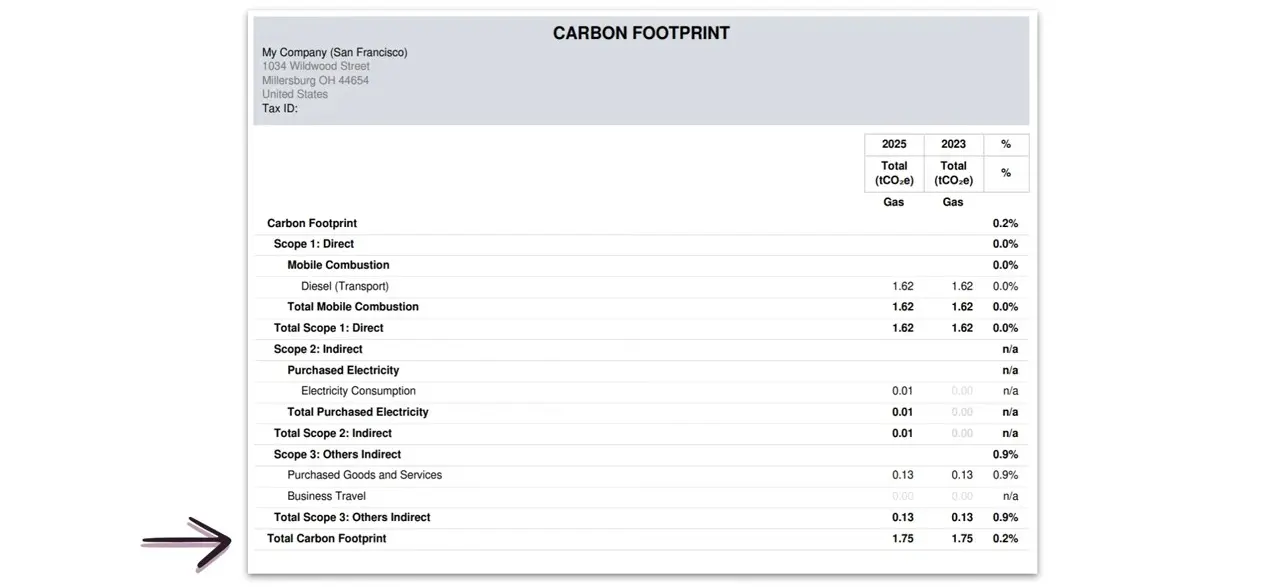
Carbon Footprint Report: Odoo auto-generates your carbon footprint report with Scope 1, 2 and 3 emissions
Emission Factor Database Integration: Odoo 19 introduced an extensive emission factor database that connects specific products, materials, and activities to their associated carbon intensity. When procurement teams purchase materials, the system automatically assigns relevant emission factors based on product categories, supplier locations, and transportation methods. This automation eliminates the manual lookup and calculation previously required for carbon accounting.
Real-Time Environmental Dashboards: Visual dashboards provide immediate insight into environmental performance with customizable views showing:
- Total carbon footprint trends over time
- Emission breakdowns by scope, department, product line, or supplier
- Carbon intensity metrics (emissions per revenue, per product unit, per employee)
- Progress toward emission reduction targets
- Comparative analysis between facilities, regions, or business units
Energy and Resource Consumption Monitoring: Beyond carbon emissions, Odoo ESG tracks broader environmental metrics including electricity consumption, water usage, waste generation, recycling rates, and renewable energy adoption. These metrics connect directly to utility invoices, meter readings, and operational data for accurate tracking without additional data entry burden.
2. Social Impact and Workforce Sustainability
The social dimension of ESG addresses how organizations treat employees, engage with communities, and ensure ethical labor practices throughout their value chain.
Diversity, Equity, and Inclusion (DEI) Metrics: Odoo ESG integrates with human resources modules to automatically track workforce diversity across multiple dimensions including gender, ethnicity, age, disability status, and veteran status. The platform generates diversity reports showing representation at different organizational levels, pay equity analysis, and hiring trend analysis. This data visibility enables organizations to identify disparities and measure the effectiveness of DEI initiatives over time.
Employee Wellbeing and Engagement: The platform monitors indicators of workforce health and satisfaction including:
- Employee turnover rates and retention statistics
- Training and development participation
- Health and safety incident reporting
- Employee satisfaction survey results
- Work-life balance metrics
Labor Standards and Ethical Compliance: For organizations with complex supply chains, Odoo ESG helps monitor supplier adherence to ethical labor standards. The system can flag suppliers based on risk assessments, track supplier audits and certifications, and ensure procurement decisions consider social responsibility alongside cost and quality factors.
Community Engagement Tracking: Organizations committed to social impact can document and measure community initiatives including charitable donations, volunteer hours, local procurement commitments, and community development programs. This tracking demonstrates tangible social contribution beyond internal workforce practices.
3. Governance, Compliance, and Risk Management
Strong governance frameworks ensure that sustainability commitments translate into consistent organizational behavior with appropriate oversight and accountability.
Approval Workflows and Authorization Controls: Odoo ESG implements configurable approval hierarchies for sustainability-related decisions and actions. For example, procurement requests exceeding certain emission thresholds might require sustainability manager approval, or deviation from approved supplier lists might trigger compliance reviews. These automated workflows embed sustainability considerations into operational decision-making.
Audit Trails and Documentation Management: Complete audit trails capture every data entry, modification, and approval action within the ESG system. This comprehensive documentation proves essential during external audits, regulatory examinations, or investor due diligence. The system maintains version history for all sustainability reports and policy documents, ensuring organizations can demonstrate compliance over time.
Policy Management and Communication: Centralized repositories store sustainability policies, procedures, standards, and guidelines with version control and distribution tracking. Organizations can document policy acknowledgment, track employee training completion, and ensure consistent policy application across locations and departments.
Risk Assessment and Mitigation Tracking: Environmental and social risks receive the same systematic treatment as financial and operational risks. Organizations can document identified sustainability risks, assign ownership for mitigation actions, track remediation progress, and monitor residual risk levels. This structured approach ensures sustainability risks receive appropriate executive attention and resources.
Regulatory Compliance Management: As ESG regulations proliferate globally, Odoo ESG helps organizations track applicable requirements, maintain compliance evidence, manage reporting deadlines, and generate required disclosures. The platform can be configured to support various regulatory frameworks including EU Corporate Sustainability Reporting Directive (CSRD), Task Force on Climate-related Financial Disclosures (TCFD), and regional environmental regulations.
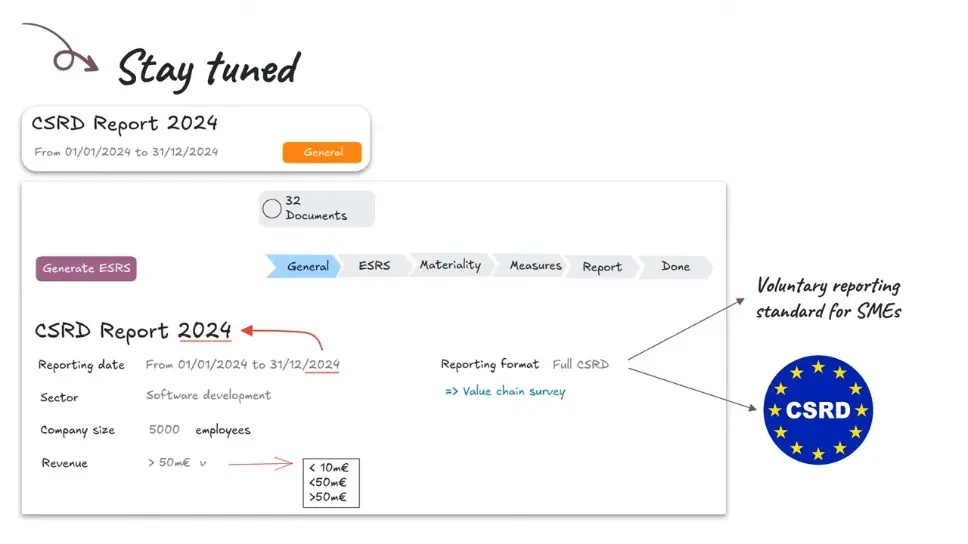
CSRD report by Odoo ESG
4. Integrated Reporting and Stakeholder Communication
Effective ESG management requires clear communication with diverse stakeholders including investors, customers, regulators, employees, and communities.
Automated Report Generation: Odoo ESG generates comprehensive sustainability reports that pull data directly from operational systems, ensuring accuracy and eliminating manual report compilation. Organizations can create customized reports aligned with specific frameworks including:
- Global Reporting Initiative (GRI) Standards
- Sustainability Accounting Standards Board (SASB) metrics
- United Nations Sustainable Development Goals (UN SDGs)
- Carbon Disclosure Project (CDP) questionnaires
- Company-specific key performance indicators
Stakeholder-Specific Dashboards: Different stakeholder groups require different information presentations. Odoo ESG enables creation of role-based dashboards that provide executives with strategic summaries, operational managers with detailed performance metrics, sustainability teams with comprehensive data access, and external stakeholders with appropriate transparency.
Data Validation and Quality Assurance: Built-in validation rules flag anomalies, inconsistencies, or missing data before reports are finalized. This quality control ensures published sustainability information maintains credibility and withstands external scrutiny.
The powerful capabilities introduced in Odoo 19's ESG modules transformed sustainability from a peripheral reporting exercise into a core operational discipline. By automating data collection, calculation, and reporting, organizations shift resources from administrative tasks to strategic sustainability initiatives that drive genuine environmental and social improvement.
For businesses ready to implement these comprehensive ESG capabilities, working with experienced Odoo Gold Partner ensures optimal system configuration, seamless integration with existing processes, and effective user adoption that maximizes platform value.
AI and Analytics: Driving Smarter ESG Decisions
Modern sustainability management extends beyond tracking historical performance to predicting future trends, identifying improvement opportunities, and optimizing resource allocation. Odoo ESG leverages artificial intelligence and advanced analytics to transform raw sustainability data into actionable strategic insights.
- Intelligent Emission Calculations: Rather than relying solely on static emission factors, Odoo's AI-enhanced calculations consider contextual variables that affect carbon intensity. For example, electricity emission factors vary based on grid carbon intensity at different times and locations. Machine learning algorithms can analyze historical patterns to provide more accurate emission estimates for activities lacking precise measurement data, improving overall carbon footprint accuracy.
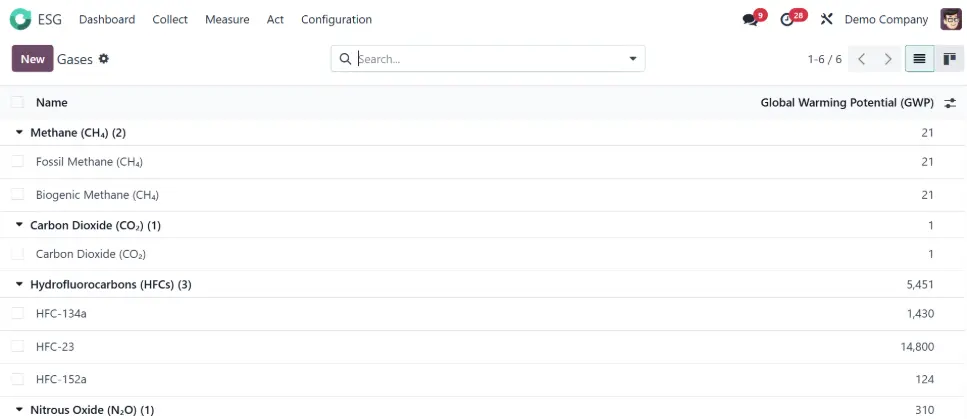
The Gases page in Odoo’s ESG module breaks down your carbon footprint
- Predictive Sustainability Analytics: AI models analyze historical trends to forecast future environmental and social performance under different scenarios. Organizations can model the emission impact of planned business expansion, evaluate the carbon reduction potential of various mitigation strategies, or predict resource consumption based on production forecasts. These predictive capabilities enable proactive sustainability planning rather than reactive reporting.
- Anomaly Detection and Alert Systems: Machine learning algorithms continuously monitor sustainability metrics to identify unusual patterns that might indicate data quality issues, operational problems, or emerging risks. For example, sudden spikes in energy consumption might indicate equipment malfunction, or unexpected increases in supplier emissions could prompt supply chain investigation. Automated alerts ensure sustainability teams address issues promptly before they escalate.
- Optimization Recommendations: AI-powered systems analyze operational data to identify specific opportunities for sustainability improvement. The platform might recommend alternative suppliers with lower carbon footprints, suggest transportation route optimizations that reduce emissions while maintaining delivery performance, or identify energy efficiency opportunities based on consumption patterns. These targeted recommendations help organizations prioritize initiatives with the greatest environmental and business impact.
- Natural Language Report Generation: Advanced reporting capabilities use natural language generation to automatically create narrative descriptions of sustainability performance alongside data visualizations. These AI-generated narratives explain trends, highlight significant changes, and provide context that makes sustainability reports more accessible to non-technical stakeholders.
- Benchmarking and Comparative Intelligence: By analyzing aggregated anonymized data across Odoo's user base, organizations can benchmark their sustainability performance against industry peers, identify best practices, and understand where they stand in the competitive landscape. This comparative intelligence helps set realistic improvement targets and validates sustainability strategy effectiveness.
Learn more about how ESG works in the latest version of Odoo 19
The integration of AI and analytics capabilities in recent Odoo releases, particularly in version 19, represents a fundamental shift from descriptive sustainability reporting to prescriptive decision support. Organizations no longer just measure their environmental and social impact - they use intelligent systems to continuously improve performance with data-driven precision.
=> Check it out: Odoo AI in Version 19 - Everything You Need to Know
Business Benefits and Strategic Value
While compliance obligations often motivate initial ESG adoption, the strategic business benefits of comprehensive sustainability management extend far beyond regulatory requirements. Odoo ESG delivers tangible value across multiple organizational dimensions.
1. Enhanced Regulatory Compliance and Risk Mitigation
ESG regulations continue proliferating globally with increasing complexity and enforcement. Odoo ESG reduces compliance burden through:
- Automated Evidence Collection: The platform maintains comprehensive documentation of sustainability performance, creating an always-audit-ready posture that dramatically reduces preparation time for regulatory examinations or external audits. All required data and supporting evidence remains accessible with complete traceability.
- Multi-Jurisdiction Support: Organizations operating across multiple countries face varying regulatory requirements. Odoo's configurable framework accommodates different reporting standards, calculation methodologies, and disclosure requirements without maintaining separate systems.
- Reduced Compliance Risk: Systematic data collection, validation, and reporting minimize the risk of compliance failures, reporting errors, or regulatory penalties. The platform's automated workflows ensure appropriate reviews and approvals occur before information is externalized.
2. Operational Efficiency and Cost Reduction
Sustainability improvements frequently deliver direct cost savings alongside environmental benefits:
- Resource Optimization: Detailed visibility into energy consumption, material usage, and waste generation enables organizations to identify inefficiencies and implement targeted improvements. Reducing energy consumption lowers utility costs while decreasing carbon emissions.
- Supply Chain Efficiency: Comprehensive supplier sustainability data supports strategic sourcing decisions that balance cost, quality, and environmental impact. Organizations can negotiate better terms with preferred sustainable suppliers while reducing supply chain risks.
- Process Automation: Automating sustainability data collection and reporting eliminates thousands of labor hours previously spent on manual data entry, spreadsheet management, and report compilation. Sustainability teams redirect effort from administrative tasks to strategic initiatives.
- Predictive Maintenance: Environmental monitoring data can indicate equipment performance degradation before failures occur. Addressing issues proactively reduces maintenance costs, prevents production disruptions, and extends asset lifespans.
3. Enhanced Brand Reputation and Competitive Differentiation
Sustainability performance increasingly influences customer preferences, business partnerships, and competitive positioning:
- Transparent Sustainability Communication: Credible, data-backed sustainability reporting builds trust with customers, investors, and partners. Organizations can confidently communicate achievements and commitments knowing they have robust data to support claims.
- Customer Preference Alignment: Growing consumer awareness of environmental and social issues drives preference for sustainable brands. Demonstrated ESG commitment attracts environmentally and socially conscious customers willing to pay premium prices.
- Competitive Advantage in B2B Markets: Business customers increasingly require suppliers to meet sustainability standards and provide environmental product declarations. Odoo ESG enables organizations to respond quickly to customer sustainability questionnaires and RFP requirements with accurate, comprehensive data.
Talent Attraction and Retention: Particularly among younger professionals, employer sustainability performance strongly influences employment decisions. Organizations with credible ESG programs attract higher-quality talent and experience better retention rates.
4. Improved Access to Capital and Investment
Financial markets increasingly incorporate ESG performance into investment decisions:
- ESG Investor Requirements: Institutional investors, private equity firms, and venture capitalists conduct detailed ESG due diligence. Organizations with mature sustainability management systems present lower risk profiles and attract more favorable investment terms.
- Sustainable Finance Access: Green bonds, sustainability-linked loans, and other innovative financial instruments offer favorable terms to companies meeting specific sustainability criteria. Odoo ESG provides the documentation and performance tracking required to access these capital sources.
- Valuation Premium: Companies with strong ESG performance often command higher valuations in M&A transactions and public markets. Comprehensive sustainability data supports premium valuations during financing events or exits.
5. Strategic Decision Support and Long-Term Resilience
Beyond immediate operational benefits, Odoo ESG supports strategic planning and organizational resilience:
- Climate Risk Assessment: Understanding carbon exposure across operations and supply chains helps organizations assess physical and transition risks associated with climate change. This insight informs strategic planning for resilient business models.
- Scenario Planning: The ability to model sustainability implications of strategic decisions enables better long-term planning. Organizations can evaluate the ESG impact of expansion plans, product development initiatives, or operational changes before committing resources.
- Stakeholder Alignment: Comprehensive ESG data facilitates meaningful dialogue with diverse stakeholders including employees, communities, NGOs, and regulators. This engagement builds social license to operate and reduces conflict.
The business case for Odoo ESG extends far beyond compliance checkbox satisfaction. Organizations that embrace comprehensive sustainability management position themselves for sustained competitive advantage, operational excellence, and long-term value creation in an increasingly sustainability-conscious global economy.
Real-World Applications and Industry Use Cases
Odoo ESG delivers value across diverse industries, each with unique sustainability challenges and opportunities. Understanding sector-specific applications illustrates the platform's versatility and practical impact.
Manufacturing and Industrial Operations
- Carbon-Intensive Production Monitoring: A multinational electronics manufacturer implemented Odoo ESG to track Scope 1 and Scope 2 emissions across fifteen production facilities in seven countries. The integrated system captures energy consumption from manufacturing equipment, facility HVAC systems, and on-site power generation. Real-time dashboards reveal which production lines and facilities contribute most significantly to the corporate carbon footprint, enabling targeted energy efficiency investments. After implementation, the company reduced overall energy consumption by 18% within two years while maintaining production volumes.
- Supplier Sustainability Scorecards: An automotive parts supplier uses Odoo ESG to evaluate and monitor the environmental performance of its 200+ component suppliers. The system maintains supplier-specific emission factors, tracks supplier sustainability certifications, and flags high-risk suppliers requiring additional due diligence. This capability helped the company respond to automotive OEM requirements for supply chain carbon transparency and reduced Scope 3 emissions by 12% through strategic supplier development programs.
Retail and Consumer Goods
- Product Carbon Footprint Labeling: A fashion retailer leverages Odoo ESG to calculate product-level carbon footprints across its clothing lines. The system tracks emissions from raw material extraction through manufacturing, transportation, and distribution. This granular data enables the company to provide customers with carbon footprint labels on product tags and e-commerce listings, differentiating sustainable product lines and supporting premium pricing for low-carbon options.
- Circular Economy Initiatives: A consumer electronics company uses Odoo ESG to manage product take-back programs and recycling initiatives. The platform tracks collected end-of-life products, monitors material recovery rates, and calculates avoided emissions from recycling versus virgin material production. This data demonstrates circular economy progress to investors and supports compliance with extended producer responsibility regulations.
Professional Services and Technology
- Business Travel Carbon Management: A global consulting firm with 5,000 employees implemented Odoo ESG to track and reduce carbon emissions from business travel. The system integrates with travel booking platforms to automatically calculate flight emissions, hotel stays, and ground transportation impact. Consultants receive carbon budget allocations and see real-time emission impacts when selecting travel options. The transparency led to a 35% reduction in air travel emissions through increased virtual meetings and more efficient trip planning.
- Office Operations Sustainability: A technology company with distributed offices uses Odoo ESG to monitor energy consumption, waste management, and water usage across locations. The centralized platform enables facility managers to benchmark performance across offices, identify best practices, and implement improvements systematically. The company achieved carbon-neutral office operations within 18 months through targeted efficiency improvements and renewable energy procurement.
Healthcare and Pharmaceuticals
- Medical Supply Chain Transparency: A hospital network implemented Odoo ESG to evaluate the environmental impact of medical supplies and pharmaceutical procurement. The system tracks emissions associated with different suppliers and product categories, helping procurement teams make informed decisions that balance cost, quality, and sustainability. The initiative reduced supply chain emissions by 8% while maintaining clinical standards and achieving modest cost savings.
- Waste Management Optimization: Healthcare facilities generate significant medical and hazardous waste requiring careful management. Odoo ESG helps a pharmaceutical manufacturer track waste generation by type, monitor disposal compliance, and identify waste reduction opportunities. The platform's reporting capabilities simplified regulatory compliance while the data insights enabled process improvements that reduced hazardous waste generation by 22%.
Food and Agriculture
- Farm-to-Table Traceability: An organic food distributor uses Odoo ESG to provide customers with complete carbon footprint transparency for products. The system tracks emissions from agricultural production through processing, packaging, and distribution. Customers access product-specific sustainability information through QR codes, supporting premium pricing and brand differentiation in competitive markets.
- Regenerative Agriculture Monitoring: An agricultural cooperative uses Odoo ESG to monitor soil health indicators, water usage, and biodiversity metrics across member farms. The platform demonstrates the environmental benefits of regenerative farming practices to buyers seeking sustainably sourced ingredients. This data transparency helped secure long-term supply agreements with premium food brands.
These real-world applications demonstrate that Odoo ESG delivers practical value across industries by connecting sustainability goals to operational reality. The platform's flexibility accommodates sector-specific requirements while maintaining consistent core functionality that supports universal ESG principles. Organizations implementing Odoo 19's ESG capabilities gain not just compliance tools but strategic assets that drive genuine environmental and social improvement alongside business performance.
Conclusion: Odoo ESG as the Foundational Platform for Sustainable Enterprise Management
Odoo ESG represents a paradigm shift in how organizations approach sustainability by embedding environmental and social considerations directly into operational business processes. Rather than treating ESG as a separate compliance exercise, the platform connects sustainability metrics to procurement decisions, manufacturing operations, human resource practices, and financial performance. This integration ensures sustainability data flows automatically from daily activities, providing real-time visibility and eliminating the manual overhead that previously constrained sustainability programs.
The introduction of dedicated ESG capabilities in Odoo 19 marked a watershed moment in enterprise sustainability management technology. Automated carbon footprint tracking, intelligent emission calculations, comprehensive compliance reporting, and AI-powered analytics transformed what's possible in sustainability management. Organizations implementing these capabilities gain not just reporting tools but strategic decision-support systems that drive continuous environmental and social improvement.
For organizations ready to transform sustainability from aspiration to operational reality, Odoo ESG provides the comprehensive platform required for success. Whether addressing immediate compliance needs, pursuing strategic sustainability differentiation, or building long-term organizational resilience, the integrated capabilities of Odoo's ESG modules deliver the functionality, flexibility, and intelligence required for enterprise sustainability leadership..
Ready to transform your sustainability management with Odoo ESG? Contact A1 Consulting today to discuss how our Odoo implementation expertise can help your organization achieve ESG excellence while driving business value.

Sally N.
BDM - Partner and Alliance
With over 7 years of experience in ERP advisory, Sally has worked closely with SMEs across Malaysia to streamline operations and drive digital transformation. Her deep understanding of business processes and hands-on approach have made her a trusted advisor to many growing companies. Through this blog post, Sally aims to share practical insights and real-world lessons drawn from her implementation experience, offering guidance to businesses navigating their own ERP journey.